
"major producing country"
5000 article(s) found

Nigerian Coffee Trade and Marketing the impact of Nestl é instant on Nigerian coffee consumption
Unlike major African coffee producing countries such as Ethiopia and Kenya, Nigeria has no centralized coffee exchanges of any type and no formal coffee trading system. In addition, a small number of buyers of Nigerian coffee are often unable to promise to buy the entire harvest of a farm, which can only lead to further instability. Due to lack of government

A brief introduction to the Origin, Development, History and Culture of Sidamo Shakiso Fine Coffee beans
Shakisso/Shakiso, located in the Guji producing area of Sidamo, is one of the micro-producing areas with regional characteristics in the Sidamo producing area. The coffee in this region is quite unique, and the coffee produced has often attracted the attention of the market. The original meaning of Ninety Plus's legendary bean (nekisse) comes from Nectar from shakisso, its producing area.

The fine acidity of Ethiopia's major coffee growing areas Manor Introduction
Ethiopia is located between 6 ° N and 9 ° N and between 34 ° E and 40 ° E. It is located in the center of the Horn of Africa and is a landlocked country. It borders Djibouti and Somalia in the east, Sudan in the northwest, Eritrea in the north and Kenya in the south. [5]Terrain Ethiopia is dominated by mountainous plateaus, mostly subordinate to the Ethiopian plateau, and the central and western regions are the main plateau, accounting for the whole territory.

Angora coffee beans
Angola's Angola, which has been growing coffee for more than 100 years, ranked first in Africa until 1960 and reached 225000 tons in 1979, ranking second in Africa and fourth in the world. The output in 1992 was 5000 tons. Sisal production is second only to coffee, and the level of per unit yield is higher. In 1986, the output reached 20,000 tons, sisal ranked second in Africa both in terms of output and export volume. Luo'an, Xinhuanet
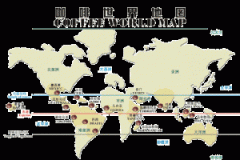
African coffee Angora coffee beans
Angolan coffee Angola Angola has been growing coffee for more than 100 years, and its output has been the first in Africa until 1960, reaching 225000 tons in 1979, ranking second in Africa and fourth in the world. The output in 1992 was 5000 tons. Sisal production is second only to coffee, and the level of per unit yield is higher. In 1986, the output reached 20,000 tons, sisal ranked second in Africa both in terms of output and export volume.
Price of Angolan coffee beans
Angolan coffee Angola Angola has been growing coffee for more than 100 years, and its output has been the first in Africa until 1960, reaching 225000 tons in 1979, ranking second in Africa and fourth in the world. The output in 1992 was 5000 tons. Sisal production is second only to coffee, and the level of per unit yield is higher. In 1986, the output reached 20,000 tons, sisal ranked second in Africa both in terms of output and export volume.

Story of the Origin of Coffee Bean cultivation in Central America and Costa Rica Coffee beans in Milasu Manor in Tara Pearl producing area
Professional coffee knowledge exchange more coffee bean information please follow the coffee workshop (Wechat official account cafe_style) Costa Rica's seven main coffee producing areas are distributed from northwest to southeast along with the inland central plateau. Costa Rican volcanic terrain has fertile volcanic ash, mild and suitable temperature, and stable abundance.

What are the characteristics of the eight major producing areas of Guatemalan coffee
Professional coffee knowledge exchange more coffee bean information please follow the coffee workshop (Wechat official account cafe_style) basic information of the Republic of Guatemala ● area of Japan 1 big 3 capital Guatemalan city language Spanish Mayan national GDP 250,000 yen per person (year) 2009 Guatemala delegation members include Mr. Matsumoto and Old New of Matsumoto Coffee Co., Ltd.

Blueberry Tea Floral Sitama Charkiso Fine Coffee Bean Planting Location Climate Elevation
Limu Coffee This coffee is grown in areas ranging from 1400 to 2000 meters above sea level. This coffee is wet processed and has a strong aroma; the fruit is full and the pH is moderate; the quality is excellent and the spicy flavor is attractive. It is estimated that the average annual production of this coffee is 29000 tons (equivalent to 480,000 bags of 60 kg coffee) out of 49000 hectares of cultivated acreage.

How do you drink Ugandan coffee? What are the flavor characteristics? What kind of variety do you grow?
How do you drink Ugandan coffee? What are the flavor characteristics? What kind of variety do you grow? Uganda is a landlocked country in East Africa and is known as the "Pearl of Africa". Because of the dependent colonial economy, coffee accounts for most of the export income. Coffee characteristic coffee beans are a major commodity in global trading volume second only to crude oil, and the price rise or fall is related to the coffee bean producing countries.

Mild acidity treatment method for grinding degree and roasting degree of coffee in Saint Roman Manor, Costa Rica
Because of the sweetness, even if the coffee gets cold, it tastes very good, which is a major feature of Costa Rican coffee. Product name: Costa Rica Tara Pearl Costa Rica Tarrazu SHB country: Costa Rica production area: Tara Pearl Tarrazu Manor: jaguar Manor El Puma Estate Grade: SHB/EP treatment method: washing fermentation, drying and baking degree in the later stage

A brief introduction to the description of the flavor and aroma characteristics of Coffee beans with Citrus aroma
Ethiopia has unique and different flavors, providing customers all over the world with a wide range of taste choices. In the highlands of southwestern Ethiopia, the Kaffa, Sheka, Gera, Limu and Yayu Senri coffee ecosystems are considered to be Arabica coffee.

El Salvador pacas Pacas Coffee Variety El Salvador Coffee Harvest season
Professional coffee knowledge exchange more coffee bean information please follow the coffee workshop (Wechat official account cafe_style) Coffee tree in botany, belongs to the Rubiaceae coffee subgenus evergreen tree, coffee beans are the seeds of coffee tree fruit, including three major varieties: Arabica species (Arabica), Robusta species (Robusta) and Liberian species (Liberica), these three major products

Brazilian coffee, Brazil is a big coffee country in the world.
Brazilian coffee generally refers to coffee produced in Brazil. There is a wide variety of Brazilian coffee, the vast majority of which are unwashed and sun-dried, classified according to the name of the state of origin and the port of transport. Brazil has 21 states and 17 states produce coffee, but four of them produce the largest, accounting for 98% of the country's total output. Brazilian coffee has a low sour taste, which goes well with coffee.

A brief introduction to the flavor, taste and aroma characteristics of Sidamo Shakiso boutique coffee beans
Flavor: medium sweet and sour aromas of sun berries, citrus, slightly fermented fruit, fruit wine. Palate: comfortable and interesting sour fruit, good sweetness and low thickness. Ethiopian coffee beans grow in close to the natural environment, after years of planting under the same growth conditions, Ethiopian coffee beans have gradually adapted to the environment here. Exceed
Individual coffee is recommended to meet Brazilian coffee
Brazilian coffee Brazils to distinguish it from Milds coffee. The vast majority of Brazilian coffee is unwashed and sun-dried and is classified according to the name of the state of origin and port of transport. Brazil has 21 states and 17 states produce coffee, but four of them produce the largest, accounting for 98% of Brazil's total output. They are: Parana, SaoPaulo and rice.
China wants to export coffee to become a major global coffee production base
China's coffee production and consumption China believes it has enough strength to compete with the world's two largest coffee producers: Brazil and Colombia, which produce 5.12 million bags and 1.25 million bags (60kg each), respectively. These two countries account for more than 50% of global coffee production. Vietnam in Asia relies on the cultivation of robusta coffee (robusta).

Forecast of Yunnan Coffee quotation Price towards beans in 2017
China is one of the countries with the fastest growth in coffee consumption in the world, with a coffee consumption of 90,000 tons a few days ago, which is still relatively low compared with major consumer countries such as Japan and South Korea in Asia. However, China's coffee consumption is growing at an annual rate of more than 20%, which is far higher than the 3% growth level in the world, and the market space is huge. According to the analysis of the global coffee production and marketing situation, by 2020, Yunnan

Boutique coffee beans Costa Rican coffee
Costa Rica is bordered by the Caribbean Sea to the east and the Pacific Ocean to the west, as the country's name means in Spanish: a fertile coast. Located in the south of SanJos, the capital of Tarasu, Costa Rica is one of the most valued coffee growers in the country. Tarasu (Tarrazu) is one of the major coffee producers in the world. Coffee farming is an extremely important production in Costa Rican agriculture.

Flavor description of Costa Rican Diamond Hill boutique coffee beans with light and pure flavor
Tarrazu in Costa Rica is one of the major coffee producing areas in the world. The coffee produced is light and pure in flavor and pleasant in aroma. Costa Rica, with its fertile volcanic soil and good drainage, is the first country in Central America to grow coffee and bananas for commercial value. Coffee and bananas are the country's main exports. In 1729, coffee was introduced from Cuba to Goth.